


Rethinking Recruitment, Retention & Resilience
Discover how your organization can tackle the challenges of increasing service demand and a shrinking workforce with field-tested, cutting-edge talent management strategies.

Jane E. Hyde, Ph.D.
Summit Chair & Senior Associate,
OPEN MINDS
The 2026 OPEN MINDS Health & Human Services Workforce Best Practices Summit will feature sessions on trauma informed approaches to sustaining top professionals, strategies for change management, rethinking compensation and benefits trends, new staffing models including fractional and contingent workforces, and trends in recruitment, including AI.
2026 Summit Agenda
New Perspectives On Sustaining Your Top Professionals
Recently, behavioral health organizations have been acknowledging the effects of working with, feeling empathy for, and having responsibility for trauma survivors. Whether this effect is referred to as vicarious trauma (VT) or secondary traumatic stress, there is no doubt that the work can influence a provider’s worldview, their sense of safety, their own relationships, their sense of hope, and their energy and enthusiasm for their work.
This presentation will challenge some of the myths of vicarious trauma, such as that work is entirely depleting and that home life is entirely fulfilling, and that there is such a thing as work-life balance. Presenters will discuss specific techniques employers can use to help sustain their top employees by growing their hope and energy in the workplace, thereby reducing turnover. Case studies will share strategies for developing skills to enhance employees’ work lives, to help employees thrive through intensity, to develop radical compassion, and to recover from crisis.
During the session, attendees will:
- Identify three myths about vicarious trauma and their alternative truths.
- List eight skills to sustain top employees and discover organizational plans to teach and support these skills.
- Identify agency structures to support providers in recovering from crisis, reducing fatigue and burnout.
Peggy Kelly, LPC-S

Peggy Kelly, LPC-S, is Chief Executive Officer of Youth Home, Inc. in Little Rock, Arkansas, where she leads strategic growth—expanding service lines and widening the agency’s geographic reach—while maintaining a commitment to trauma-informed, evidence-based care. Previously as Chief Clinical Officer, she oversaw all clinical services, diversified funding streams, launched new programs, and led a cultural transformation using the Risking Connections trauma‑informed care model.
She served five years as Director of Clinical Services at Jewish Family & Career Services (JF&CS) in Atlanta before returning to Arkansas in 2014 to join Youth Home. Peggy holds a B.S. in Business and Finance from the University of Arkansas and an M.S. in Behavioral Studies from the University of South Alabama. She has practiced in Alabama, Georgia, Michigan, and Arkansas, providing individual, family, and group behavioral health services, and has worked as an Employee Assistance consultant for Fortune 500 companies and a large hospital system, advising on policy development and implementation. Her areas of expertise include employee wellness, workplace violence, substance abuse, and conflict resolution.
Peggy serves on the boards of the Arkansas Behavioral Health Council and the National Association of Children’s Behavioral Health. She and her husband, Donnie, enjoy Arkansas’s mountains and lakes and attend concerts and outdoor festivals whenever time permits.
Patricia Wilcox, LCSW

Patricia D. Wilcox, LCSW, is Klingberg’s Vice President of Strategic Development. She specializes in improving systems that treat traumatized children and their families. She created the Restorative Approach™, a trauma- and relationship-based treatment method. She is a trainer for Risking Connection® and a faculty member at the University of CT School of Social Work and the University of St. Joseph’s School of Social Work. She is the author of Trauma Informed Care: The Restorative Approach as well as several articles. She trains internationally on trauma-informed care, has presented at many national conferences, and has recently been offering training with her colleague, Aminah Ali, on topics supporting full inclusion in the workplace. She was the 2011 Connecticut Social Worker of the Year and, in 2022, was designated a Soroptimist Exceptional Woman.
Building Leadership That Lasts: Designing Scalable Development Programs For A Multigenerational Workforce With Thresholds
Developing strong, sustainable leadership pipelines is a strategic imperative for behavioral health organizations facing workforce complexity and constant change. This session explores how one organization designed and implemented a comprehensive leadership development program that spans all supervisory levels, including senior leadership, ensuring alignment, consistency, and long-term impact.
Participants will learn how to move beyond one-time training events to build a structured, multi-year leadership strategy that includes ongoing support mechanisms such as coaching, check-ins, and onboarding pathways for emerging leaders. The session will also address one of today’s most pressing workforce dynamics: leading across four generations. Attendees will gain practical insights into tailoring leadership approaches to engage, motivate, and retain a diverse workforce with varying expectations and communication styles.
Key takeaways include:
- Actionable strategies to create a sustainable model for developing leaders at all levels in behavioral health
- Tools to strengthen leadership capacity and improve organizational culture
- Approaches to tailoring leadership training for different generations
Sterling Haukom Anderson, LPC

Sterling Haukom Anderson, LPC has worked in the mental health field for over 13 years and is currently the Vice President of Learning & Development at Thresholds. She has provided clinical and case management support to individuals living with severe mental illness and has developed and delivered trainings, eLearning, and consultations for both internal and external audiences on a range of topics. Sterling earned her Master’s in Counseling from DePaul University in 2012.
Build, Buy, Or Both? A Decision Framework For Revenue Cycle Management
Behavioral health organizations are under mounting pressure as staffing shortages, rising denial rates, increasing reimbursement complexity, and shrinking margins force leadership teams to rethink how they manage the revenue cycle. Some are investing in internal teams. Others are outsourcing entirely. And a growing number are landing somewhere in between.
This session offers a practical decision framework for evaluating your RCM model through the lens of a real-world provider journey. Attendees will explore the costs, tradeoffs, staffing considerations, operational complexities, and outcomes that shaped one organization’s decision to build internal capabilities, partner strategically, and evolve toward a co-sourced approach. Participants will leave with actionable insights for evaluating their own revenue cycle strategy.
Tami Lewis-Ahrendt

Tami Lewis-Ahrendt is President and CEO of CenterPointe, where she has spent more than 18 years helping transform the organization’s culture and expand access to behavioral healthcare — from leading the acquisition of the Campus for Hope to launching CenterPointe’s Certified Community Behavioral Health Clinic. She holds a master’s degree in Critical and Creative Thinking from the University of Nebraska Omaha and is a graduate of Leadership Lincoln’s Executive Class 30.
Sonia Lucas

Sonia Lucas is Vice President of Revenue Cycle Management Services (RCMS) at Qualifacts, where she leads strategic initiatives that help behavioral healthcare organizations optimize financial performance and operational efficiency. With more than 25 years of experience in healthcare technology, SaaS, customer operations, business development, and leadership, Sonia has held executive roles spanning customer support, analytics, sales, and partner services. Throughout her career, she has focused on helping healthcare organizations improve outcomes through technology, innovation, and service excellence.
Tammy Selleck
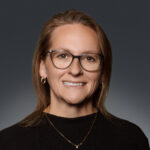
Tammy Selleck has a BS in Accounting and an MBA from Indiana University Kelley School of Business. She has accounting experience in both the public and private sectors. She is a former BH CFO with 11 years of service with Qualifacts in Revenue Cycle Management across multiple areas of focus. In addition, she is a specialist in assisting agencies in bridging the gap to success in the revenue cycle through evaluation of people, processes, and systems.
Leading Through Change By Creating Agile Teams
Behavioral health organizations are operating in a period of constant change—from new payment models and regulatory shifts to workforce shortages and evolving care delivery expectations. For today’s executives, the ability to lead organizations through change is no longer optional; it’s a core leadership competency.
This session will explore practical change management strategies tailored to behavioral health organizations. Leaders will learn how to align teams around a clear vision, communicate effectively during periods of transition, and build cultures that are resilient and adaptable. Speakers will share lessons learned from implementing major organizational changes—from restructuring services to adopting new technologies—and discuss how leaders can engage staff, reduce resistance, and sustain momentum in a rapidly evolving environment.
Jeffrey Ralph, Ed.D.

Jeff has held various positions within the field of Juvenile Justice. The majority of his time has been spent as a Treatment Supervisor at a residential placement for adjudicated youth. Prior to joining the JusticeWorks team, he oversaw clinical and operational systems as a Unit Manager in the Philadelphia Prison System. Jeff joined JusticeWorks in October of 2013.
He holds a Bachelor’s Degree in Criminal Justice and a Master’s Degree in Administration of Justice, both from Shippensburg University. Jeff obtained his Doctorate in Education in Organizational Leadership from Wilmington University. Jeff’s expertise has been recognized by his appointment as an adjunct professor at Wilmington University and Eastern University, where he teaches part-time.
Leadership Approaches To The Ethical Uses Of AI: An Interactive Discussion Session
Artificial intelligence is changing how organizations recruit, schedule, support, and manage their workforce. As these tools become part of everyday operations, executive leaders must ensure AI is used in ways that are ethical, transparent, and aligned with organizational values while maintaining employee trust and accountability.
In this interactive discussion session, attendees will examine real-world AI scenarios related to workforce management and organizational leadership. Through facilitated discussion, participants will explore the leadership decisions each scenario requires, discuss the legal and ethical considerations involved, and identify practical approaches for establishing responsible AI policies across their organizations.
Stuart Buttlaire, Ph.D., MBA

Stuart Buttlaire brings over 35 years of executive, clinical, and policy experience to OPEN MINDS. Dr. Buttlaire has experience in both the public and private sectors of healthcare providing leadership and direction in healthcare delivery. His career has focused on advancing integrated behavioral health and addiction medicine through strategic innovation, system redesign, quality improvement, and sustainable policy reform.
Previously, Dr. Buttlaire was the Regional Director of Behavioral Health and Addiction Medicine for Kaiser Permanente. In this role, Dr. oversaw a $200 million portfolio serving 4.6 million members across 23 emergency departments and 33 medical centers. He led development and operations across inpatient, ambulatory, emergency, call center, and contracted community services, supporting more than 2,500 mental health and substance use disorder providers. His leadership resulted in significant system transformation grounded in person-centered, measurement-based, and integrated care models. Dr. Buttlaire was also the lead Mental Health Representative for State Program Initiatives, including Medicaid (Medi-Cal) and Medicare. He pioneered the design and implementation of two psychiatric inpatient units, including a nationally recognized medical/psychiatric unit for individuals with complex co-morbidities. Additional innovations include integrated urgent services for youth and adults, intensive outpatient programs, multi-family group treatments for severe psychiatric conditions, and a mobile app for eating disorders that earned Kaiser’s Innovation Award.
Dr. Buttlaire is a widely respected advisor on behavioral health policy, legislation, and regulatory strategy. He has worked closely with state and federal agencies on issues of parity enforcement, financing reform, Medicaid redesign, and systems integration. He currently serves as Board President of the Institute for Behavioral Health Improvement, is a Board Member of NAMI California, and sits on the California Hospital Association Behavioral Health Advisory Board. He previously chaired the Behavioral Health Section of the American Hospital Association and was appointed to the AHA Regional Policy Board for the Western U.S.
As a frequent speaker and author, Dr. Buttlaire has published articles and research papers on behavioral health integration, suicide prevention, financing, and policy reform. His work continues to shape strategic direction for public and private behavioral health systems across the country.
Dr. Buttlaire holds a Ph.D. in Clinical Psychology from the California Institute of Integral Studies, an MBA with a concentration in Health Care Management and Finance from UC Irvine’s Paul Merage School of Business, a Master’s in Counseling Psychology from Humboldt State, and a B.A. in Psychology and Political Science from the University of Colorado.